
Services
Indoor Air Quality (IAQ) Assessment
Investigate indoor conditions, airborne contaminants and potential sources.
Discuss your project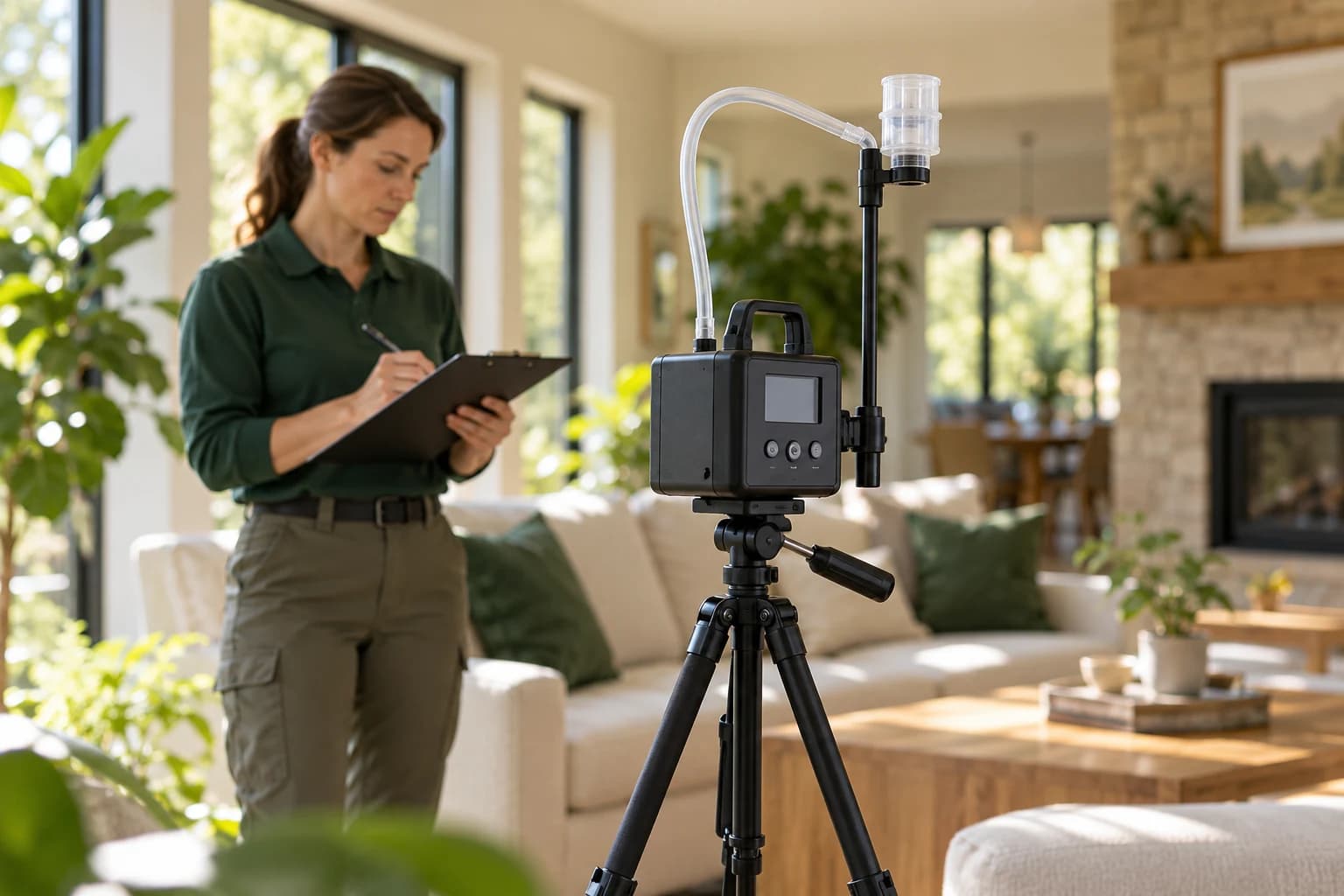
UNDERSTAND YOUR OPTIONS
A closer look at your assessment.
Indoor air quality can influence occupant comfort and may contribute to potential exposure to airborne contaminants and other environmental hazards. BNF's IAQ assessments evaluate temperature, relative humidity, carbon dioxide, particulate matter, VOCs, biological aerosols, odors, moisture conditions, and other relevant indoor environmental parameters, as appropriate to the assessment scope. Targeted measurements and sampling provide objective data to help identify potential environmental sources and guide corrective measures, with consideration of applicable OSHA requirements, EPA guidance, ASHRAE standards, state and local requirements, and other recognized indoor environmental criteria, as applicable.
ASSESSMENT SCOPE
What your assessment
may include.
- CO₂ assessment as an indicator of ventilation conditions
- CO monitoring for potential combustion sources
- TVOC assessment
- TMVOC assessment
- Targeted VOC analysis
- Formaldehyde testing
- PM₂.₅ and PM₁₀ monitoring
- Temperature and relative humidity
- Fungal and bacterial bioaerosol assessment
- Odor and source investigation
- Targeted mycotoxin or specialized chemical testing where indicated
WHAT TO EXPECT
From your first question
to your final report.
- 01
Scope & Quote
Tell us the property address, year built, current and historical property use, building type, occupant concerns, suspected sources, and intended use of the assessment. BNF establishes the appropriate assessment parameters, measurements, sampling strategy, and evaluation criteria.
- 02
BNF IAQ Assessment
BNF professionals evaluate indoor environmental conditions using appropriate instruments and methods, including temperature, relative humidity, carbon dioxide, particulate matter, VOCs, biological aerosols, odors, moisture conditions, and other relevant parameters, as applicable.
- 03
Sampling & Analysis
Where laboratory testing is warranted, environmental samples are collected using appropriate methods and submitted to an appropriately accredited laboratory. Instrument measurements and field observations are documented as part of the assessment.
- 04
CIH Review & Report
BNF's Certified Industrial Hygienist (CIH) reviews and interprets applicable environmental data, where appropriate. The report documents observed conditions, analytical results, applicable criteria, and recommendations for further evaluation or corrective measures.
Loading sample reports…
A CLEARER START
Questions & answers.
What is the difference between IAQ and mold assessment?
IAQ assessment evaluates a broader range of indoor environmental conditions and potential exposure sources. Mold assessment focuses on fungal growth, moisture conditions, water-damaged materials, and, where appropriate, fungal sampling and laboratory analysis.
What does elevated indoor CO₂ indicate?
Indoor CO₂ measurements can provide information about ventilation and occupancy-related conditions and should be interpreted with building conditions and applicable ventilation criteria.