
Justin H. Joe · May 15, 2026
Lead Poisoning Symptoms in Children: What NYC and NJ Parents Need to Know
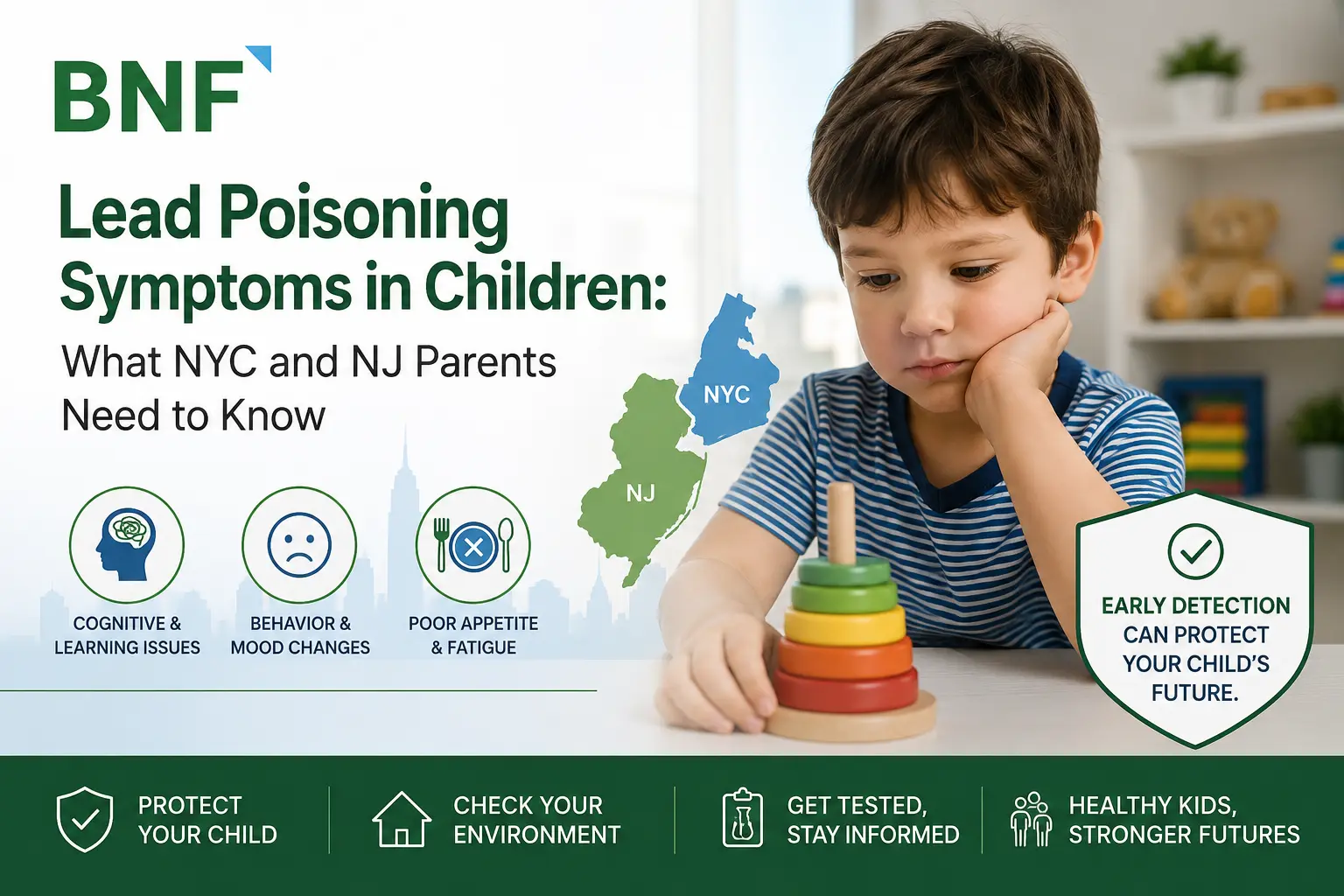
Lead poisoning is called a silent disease for a reason. In most children with elevated blood lead levels, there are no obvious symptoms in the early stages. No rash. No fever. No moment where a parent looks at their child and thinks something is clearly wrong. By the time behavioral or developmental changes become noticeable, the damage to the developing nervous system has often already occurred.
This is why the homes our children live in matter so much. And in New York City and New Jersey, where a significant proportion of the residential housing stock was built before 1978, the year lead-based paint was banned for residential use, the risk of lead exposure in older properties remains one of the most serious and underappreciated pediatric health threats in the region.
This guide is for parents and caregivers in NYC and NJ who want to understand the signs of lead poisoning in children, how exposure happens in older homes, and what to do if they suspect their child has been exposed.
How Children Are Exposed to Lead in NYC and NJ Homes
The primary source of childhood lead poisoning in New York City and New Jersey is not lead in water or soil, though both can contribute. It is lead-based paint in older housing, specifically the deteriorating paint dust and chips that children ingest through normal hand-to-mouth behavior.
Lead-based paint in good condition and left undisturbed is not an immediate hazard. The danger begins when that paint deteriorates, peels, chips, or is disturbed during renovation, repainting, or repair work. When painted surfaces rub against each other, such as windows opening and closing in older frames, they generate lead dust that settles on floors, windowsills, and surfaces where children play and then put their hands in their mouths.
In New York City, children under six living in pre-1960 buildings are at the highest risk. Under Local Law 1 of 2004, landlords are legally required to identify and remediate lead paint hazards in units where children under six reside. Despite this requirement, HPD violations related to lead paint remain among the most common housing violations in the city, particularly in the Bronx, Brooklyn, and upper Manhattan.
In New Jersey, the risk is similarly concentrated in older urban housing in Newark, Jersey City, Paterson, and Elizabeth, as well as in older suburban properties in Essex County, Hudson County, and Passaic County, where pre-war housing stock is common.
Lead Poisoning Symptoms in Children: What to Watch For
The challenge with lead poisoning is that early-stage symptoms are non-specific and easy to attribute to other causes. Here is what the research and clinical evidence tells us to watch for across exposure levels.
Low to Moderate Exposure: The Invisible Stage
At blood lead levels between 3.5 and 10 micrograms per deciliter, the CDC action level threshold, most children show no obvious physical symptoms. The damage during this stage is neurological and developmental. Studies have consistently found associations between blood lead levels in this range and reduced IQ scores, shortened attention span, reading and learning difficulties, and behavioral problems including hyperactivity and impulsivity. These effects can be permanent and are often not connected to lead exposure because there is no visible sign of illness.
Moderate Exposure: Early Warning Signs
As blood lead levels rise, more observable symptoms begin to appear. These include loss of appetite and unexplained weight loss. Fatigue and sluggishness that is unusual for the child's age. Irritability, mood changes, or behavioral regression. Difficulty sleeping. Stomachaches, nausea, or vomiting with no clear digestive cause. Headaches that are recurring and without another explanation. These symptoms are still non-specific and frequently attributed to other common childhood conditions.
High Exposure: Serious Neurological Effects
At significantly elevated blood lead levels, symptoms become more severe and urgent. These include learning disabilities and developmental delays that become apparent in school-age children. Hearing loss. Seizures in severe cases. Loss of developmental milestones already achieved. Encephalopathy, a form of brain damage, in the most extreme cases. At this stage, the neurological damage is severe and likely permanent.
The Pattern That Should Prompt Action
Because early lead poisoning has no obvious visible symptoms, the most important diagnostic tool for parents is a blood lead level test ordered by a pediatrician. In New York State, blood lead testing is required for all children at ages one and two. In New Jersey, testing requirements vary by county and risk assessment.
If your child has an elevated blood lead level confirmed by a blood test, the next critical step is identifying the environmental source. A confirmed elevated blood lead level in a child living in a pre-1978 home is the strongest possible indicator that a lead inspection is needed immediately.
Do not wait for symptoms to worsen. Do not assume the source is known without a professional inspection. The source may be paint in a room the child spends little time in, a window frame generating lead dust through daily use, or renovation work done in the building that distributed lead dust throughout the unit.
Lead Testing and Inspection: Why Professional Assessment Matters
Consumer lead test kits sold in hardware stores can detect the presence of lead on a painted surface, but they cannot tell you whether that lead is a hazard in its current condition, cannot measure lead dust levels in the air or on surfaces, and cannot produce the documented, defensible report needed for HPD complaints, legal proceedings, or insurance claims.
A professional lead inspection by a licensed inspector uses XRF technology, a handheld device that reads lead content through painted surfaces instantly without damaging them, combined with dust wipe sampling and laboratory analysis to identify both the presence of lead and the specific hazard conditions that are driving a child's exposure.
BNF Consulting provides CIH-led lead inspection and XRF lead testing across New York City, Westchester County, and northern New Jersey. Every inspection is led or reviewed by Dr. Justin Joe, CIH, and produces a written, laboratory-verified report that documents exactly where lead hazards exist, at what levels, and what remediation scope is warranted.
We do not perform lead abatement or remediation. Our reports are fully independent. If remediation is needed, we specify exactly what is required so that you can obtain competitive bids and ensure the work is properly scoped and not over-sold.
NYC and NJ Families: Your Rights and Your Landlord's Obligations
In New York City, if your child under six has an elevated blood lead level and you rent a pre-1960 apartment, your landlord is legally required to investigate and remediate lead paint hazards under Local Law 1 of 2004. You can file a complaint with the NYC Department of Housing Preservation and Development (HPD) and request a lead paint inspection. A CIH-led inspection report from BNF Consulting gives you the independent documentation to support that complaint.
In New Jersey, the Lead Hazard Control Assistance Act requires landlords to disclose known lead hazards and take corrective action in rental properties built before 1978 when children under six are present. A professional inspection report is the foundation of any legal or regulatory action against a non-compliant landlord.
BNF Consulting Provides Lead Inspection Across NYC and NJ
New York: Manhattan, Brooklyn, Queens, the Bronx, Staten Island, Westchester County, Nassau County, Suffolk County, Putnam County, Rockland County, Orange County, Dutchess County, Ulster County.
New Jersey: Bergen County, Essex County, Hudson County, Passaic County, Union County, Morris County.
Connecticut: Fairfield County, New Haven County, Litchfield County.
Call (914) 297-8335 for a free phone consultation. Same-day quotes available.
Book online: https://clienthub.getjobber.com/booking/c7837e10-82ff-4b7c-a467-859ed8a7ea08/
Frequently Asked Questions
Q: What are the first signs of lead poisoning in children?
A: Early lead poisoning in most children has no visible symptoms, which is why blood lead testing is essential. When symptoms do appear at moderate exposure levels they include loss of appetite, unusual fatigue, irritability, difficulty sleeping, stomach pain, and headaches. Developmental and behavioral effects including learning difficulties and shortened attention span may only become apparent over time.
Q: At what blood lead level should I be concerned?
A: The CDC has established 3.5 micrograms per deciliter as the blood lead reference value that should prompt follow-up action. There is no known safe level of lead in children. Even blood lead levels below this threshold have been associated with reduced IQ and behavioral effects in research studies.
Q: How do children get lead poisoning in NYC apartments?
A: The primary route is ingestion of lead dust from deteriorating lead-based paint. Lead dust is generated when painted surfaces rub against each other, such as windows in older frames, or when paint chips and deteriorates. Children ingest the dust through normal hand-to-mouth behavior during play on floors and near windowsills where lead dust settles.
Q: Is my NYC landlord required to fix lead paint in my apartment?
A: Yes, if you have a child under six living in a pre-1960 NYC apartment and there are lead paint hazards present. Under Local Law 1 of 2004, landlords must identify and remediate lead paint hazards in units with young children. You can file a complaint with HPD if your landlord fails to act after being notified in writing.
Q: What is XRF lead testing and do I need it?
A: XRF, or X-ray fluorescence testing, is the most accurate method of identifying lead-based paint. A handheld device reads lead content through painted surfaces instantly without damaging them. It is faster, more comprehensive, and less disruptive than paint chip sampling. XRF is the method of choice for full property lead surveys, pre-renovation assessments, and NYC landlord compliance.
Q: Can a lead inspection report be used in a legal proceeding?
A: Yes. BNF Consulting lead inspection reports are CIH-reviewed, laboratory-verified, and structured to be defensible in legal proceedings including housing court, HPD hearings, personal injury litigation, and insurance claims.
Q: How quickly can lead poisoning affect a child's development?
A: Lead's effects on the developing nervous system can begin with any measurable level of exposure and do not require prolonged high-level exposure to cause harm. The critical window is the first six years of life when the brain is developing most rapidly. Effects on IQ, attention, and behavior can result from cumulative low-level exposure over months.
Q: Does BNF Consulting do lead abatement or removal?
A: No. BNF Consulting provides lead inspection and testing only, never abatement or removal. This ensures our findings are fully independent with no financial interest in finding or creating work. If abatement is needed, we specify exactly what scope is warranted so you can obtain competitive bids.
Internal Links:
Lead Inspection service: https://www.askbnf.com/lead-inspection
Lead Testing service: https://www.askbnf.com/lead-testing
XRF Lead Testing service: https://www.askbnf.com/xrf-lead-testing
Brooklyn location: https://www.askbnf.com/brooklyn-county-ny
Queens location: https://www.askbnf.com/queens-county-ny
Manhattan location: https://www.askbnf.com/manhattan-county-ny
Westchester County: https://www.askbnf.com/westchester-county-ny
Bergen County NJ: https://www.askbnf.com/bergen-county-nj
All NJ Locations: https://www.askbnf.com/nj
Mold Symptoms in Kids: https://www.askbnf.com/post/mold-symptoms-in-kids-every-nyc-nj-parent-should-know
Lead Paint NYC Blog: https://www.askbnf.com/post/lead-paint-testing-nyc-apartments
Call (914) 297-8335 for a free consultation.
BNF Consulting
240 E Palisade Ave, Englewood, NJ 07631
Hours: Monday to Friday 8AM to 8PM | Saturday 8AM to 5PM
By Dr. Justin Joe, Certified Industrial Hygienist (CIH), Founder of BNF Consulting. Updated May 15, 2026.