
Justin H. Joe · March 30, 2026
Mold Symptoms in Kids Every NYC & NJ Parent Should Know
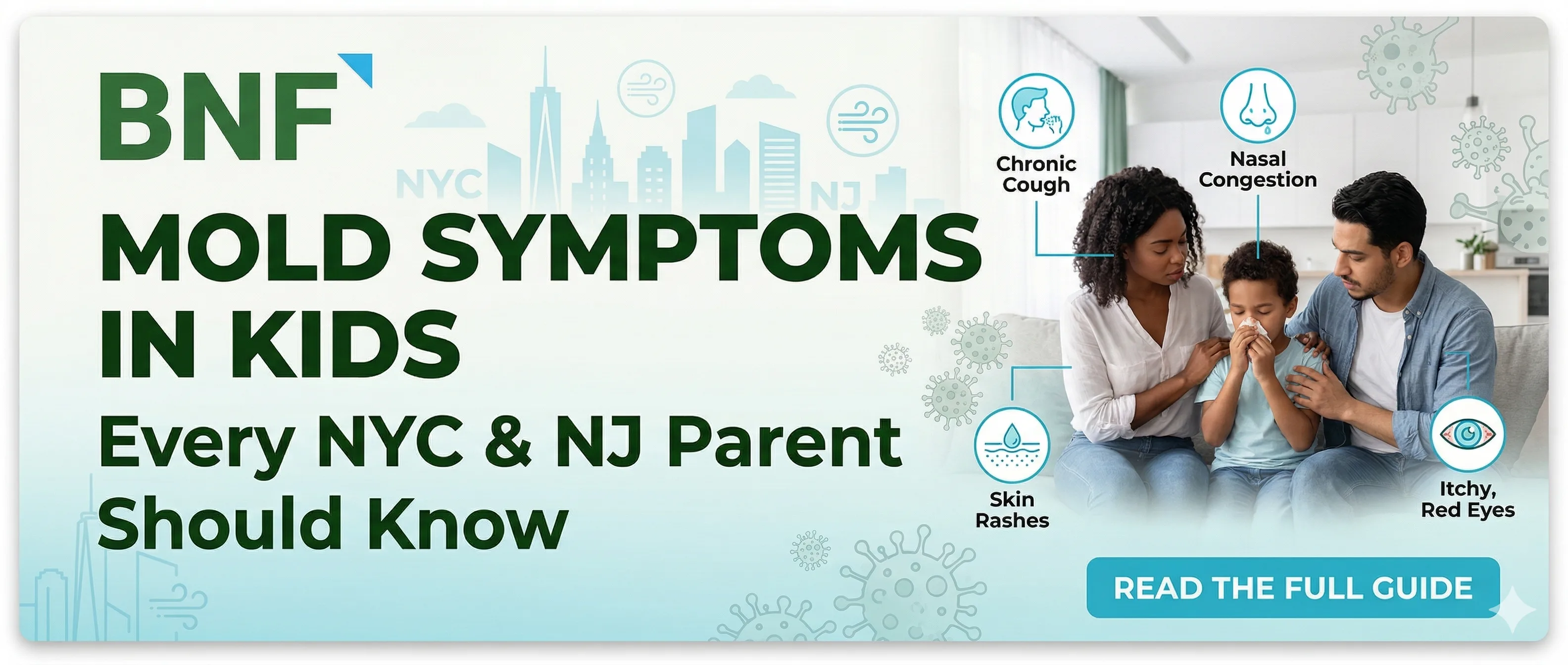
If your child has been dealing with a persistent cough, recurring congestion, or unexplained rashes that doctors keep attributing to allergies — mold exposure could be the cause. Children are significantly more vulnerable to mold than adults, and in older housing stock across New York City and New Jersey, hidden mold is far more common than most families realize.
Here is what to look for, when to be concerned, and when to call a professional.
What are the symptoms of mold exposure in kids? Mold exposure symptoms in kids include chronic coughing, nasal congestion, wheezing, skin rashes, eye irritation, headaches, and fatigue. Symptoms often worsen at home and improve when the child is away — at school, at a relative's house, or on vacation. If that pattern sounds familiar, mold exposure at home may be the cause.
Why Children Are More Vulnerable to Mold Than Adults
Children breathe more air relative to their body weight than adults — meaning they inhale a higher concentration of airborne mold spores in the same amount of time spent in a contaminated space. Their immune systems are still developing, making it harder for their bodies to manage repeated exposure without showing symptoms.
For families living in NYC apartments, older New Jersey homes, or buildings with aging plumbing and poor ventilation, this is not a theoretical risk. It is something BNF Consulting's inspectors — led by Dr. Justin Joe, Certified Industrial Hygienist (CIH), the highest credential in environmental health — encounter regularly across the tri-state area.
Signs of Mold Exposure in Kids — Full Symptom List
The following are the most frequently reported child mold exposure symptoms. The key pattern: persistent, unexplained by other causes, and consistently worse at home.
Respiratory symptoms:
Chronic coughing — especially dry or nighttime cough
Wheezing or difficulty breathing
Frequent sinus infections or post-nasal drip
Shortness of breath or chest tightness in children with asthma
Allergy-type symptoms:
Runny nose, nasal congestion, sneezing
Itchy, watery, or red eyes
Mold allergy rash — red, itchy patches on skin with no clear cause
Throat irritation
Neurological and fatigue symptoms (prolonged exposure):
Chronic fatigue or low energy
Difficulty concentrating or brain fog
Headaches that recur without explanation
Irritability or mood changes
Gastrointestinal symptoms (less common but documented):
Nausea
Stomach pain or cramping
Mold Symptoms in Toddlers — What's Different
Toddlers and infants cannot describe how they feel, which makes mold exposure particularly difficult to identify in younger children. Parents should watch for behavioral and physical changes rather than verbal complaints.
Signs of mold exposure in toddlers specifically:
Persistent runny nose and congestion with no cold or infection diagnosis
Coughing that is worse at night or nap time — when the child is in their bedroom
Recurring eye redness or discharge
Unusual fussiness, sleep disruption, or low energy with no clear cause
Skin rashes that appear and reappear without explanation
Breathing that seems labored or noisy during rest
Toddlers who spend most of their day at home — in a bedroom, playroom, or basement play area — face the longest daily exposure. If you are asking yourself "is mold making my child sick?" and your child is a toddler or infant, a professional inspection is the safest and fastest way to find out.
Mold Allergy Symptoms in Children vs Seasonal Allergies
Mold allergy symptoms in children look nearly identical to pollen or dust allergies — and children are frequently misdiagnosed, or treated for seasonal allergies while an ongoing mold problem goes unaddressed.
How to tell the difference:
Mold Allergy / Exposure | Seasonal Pollen Allergy | |
Pattern | Year-round, worse indoors | Seasonal, worse outdoors |
Location | Worse at home, improves elsewhere | Consistent regardless of location |
Trigger | Damp, humid environments | High pollen count days |
Smell | Often musty odor in the home | No associated smell |
History | May follow water damage or leak | No building event trigger |
Child mold allergy symptoms that are year-round, worst at home, and have not responded to seasonal allergy treatment are a strong signal to investigate your home environment — not increase the child's medication.
Signs of Mold Allergy vs General Mold Exposure in Kids
Not every child reacts the same way. Some develop a true mold allergy — an immune response that triggers symptoms even at low spore concentrations. Others experience signs of mold exposure in kids without a formal allergy diagnosis. Signs pointing to mold allergy:
Skin or blood testing confirms mold as an allergen
Rapid symptom relief when removed from the home
Symptoms appear even at low humidity or outside mold season
Family history of allergies or asthma
Signs pointing to mold exposure rather than allergy:
Symptoms began after a water leak, flooding, or renovations
Musty odor in the home or child's bedroom
Visible mold growth anywhere in the home
Multiple family members experiencing similar symptoms
Either pattern warrants a professional inspection. If you suspect mold exposure at home is affecting your child, call BNF Consulting at (914) 297-8335 for a free consultation.
High-Risk Rooms in NYC and NJ Homes
Bedrooms: Children spend 8–10 hours in their bedroom every night. A bedroom on a ground floor, near an exterior wall, or above a basement is among the highest-risk locations in the home for mold growth.
Bathrooms: Inadequate ventilation in apartment bathrooms is extremely common in older NYC and NJ buildings. Mold behind tile, inside walls, and above ceiling panels often goes undetected for years.
Basements and finished lower levels: Below-grade playrooms are among the most common mold sources in New Jersey homes. Poor drainage, sump pump failures, and condensation create ideal conditions — and children playing in these spaces receive prolonged daily exposure.
HVAC systems: Mold inside ductwork distributes spores throughout the entire home every time the heat or air conditioning runs. If mold is visible in one room, the HVAC system may already be involved.
When to Stop Guessing and Get a Professional Mold Inspection
Do not wait for visible mold before acting. By the time growth is visible, contamination is almost always more extensive than what you can see. Arrange a professional inspection when:
Your child's respiratory or allergy symptoms are persistent and unexplained
Symptoms consistently improve when your child is away from home
You have had any water damage, flooding, or leaks — even minor or years ago
There is a musty smell anywhere in your home
You are moving into a new apartment or home in NYC or New Jersey
Your child has been diagnosed with mold allergy and you want to confirm the source
BNF Consulting provides certified mold inspection and mold testing for families across New York City, Brooklyn, Queens, Manhattan, and Westchester and throughout New Jersey. Every inspection is led by Dr. Justin Joe, CIH — and because BNF Consulting does testing only, never remediation, our findings are always independent and objective.
If you are searching for a mold inspection near me in NYC, the five boroughs, Westchester, or anywhere in New Jersey — call (914) 297-8335 for a free consultation.
Frequently Asked Questions
Q: What are the signs of mold exposure in kids? Signs of mold exposure in kids include chronic coughing, nasal congestion, wheezing, skin rashes, eye irritation, headaches, and fatigue. A key warning sign is symptoms that are consistently worse at home and improve when the child is elsewhere — at school, at a relative's house, or on vacation.
Q: What are mold allergy symptoms in children? Mold allergy symptoms in children include runny nose, sneezing, itchy eyes, skin rashes, coughing, and wheezing. Unlike seasonal allergies, mold allergy symptoms tend to be year-round, worst indoors, and may intensify in damp or humid environments. A physician can confirm mold allergy through skin prick or blood testing.
Q: Can mold make a child sick even if you cannot see it? Yes. Mold growing inside walls, under flooring, or in HVAC systems produces airborne spores that children inhale without any visible growth being present. A musty smell, a history of water damage, or persistent unexplained symptoms are all reasons to arrange a professional inspection even when no mold is visible.
Q: What are the signs of mold exposure in toddlers? Toddlers cannot describe how they feel, so parents should watch for persistent congestion, nighttime coughing, recurring eye redness, unusual fussiness, sleep disruption, and unexplained skin rashes. Symptoms that are worst during nap time or overnight — when the toddler is in their bedroom — are a particularly strong indicator.
Q: What should I do if I think mold is making my child sick? Consult your child's pediatrician about the symptoms first. Then arrange a professional mold inspection to identify whether mold is present in your home and at what concentration. Do not attempt to clean or disturb suspected mold — this releases spores into the air and can worsen your child's exposure. BNF Consulting provides certified testing only, never remediation, so our results are always objective.
BNF Consulting provides certified mold inspection, asbestos testing and mold testing for families across: New York: Putnam, Westchester, Orange, Dutchess, Rockland, Bronx, Manhattan, Brooklyn, Queens, Staten Island, Nassau, Suffolk, Ulster, Sullivan, Greene, Delaware, Columbia
New Jersey: Bergen, Passaic, Essex, Union, Hudson, Morris
Connecticut: Fairfield, New Haven, Litchfield
Dr. Justin Joe, CIH, leads all inspections. BNF Consulting does testing only — never remediation. Call (914) 297-8335 or visit askbnf.com.