
Justin H. Joe · March 18, 2026
Symptoms of Mold Exposure Every NYC & NJ Homeowner Should Know
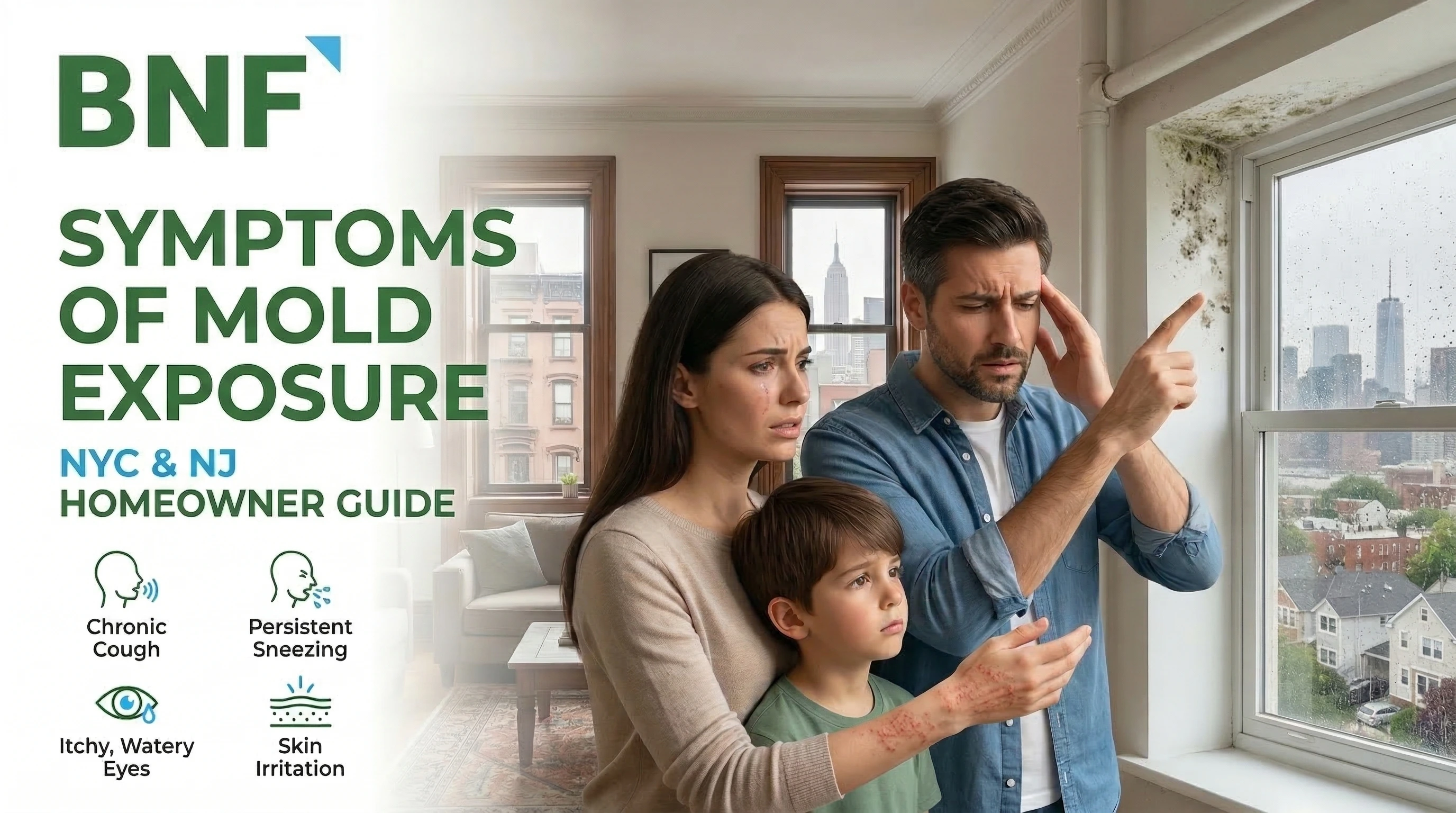
Living in New York City or New Jersey means dealing with a variety of weather conditions, from humid summers to heavy coastal storms. These shifting climates create the perfect environment for an unwelcome houseguest: mold. While a small damp patch in the basement might seem harmless, indoor mold can quietly impact your family's health, damage your property, and compromise your indoor air quality in ways that are not always immediately obvious.
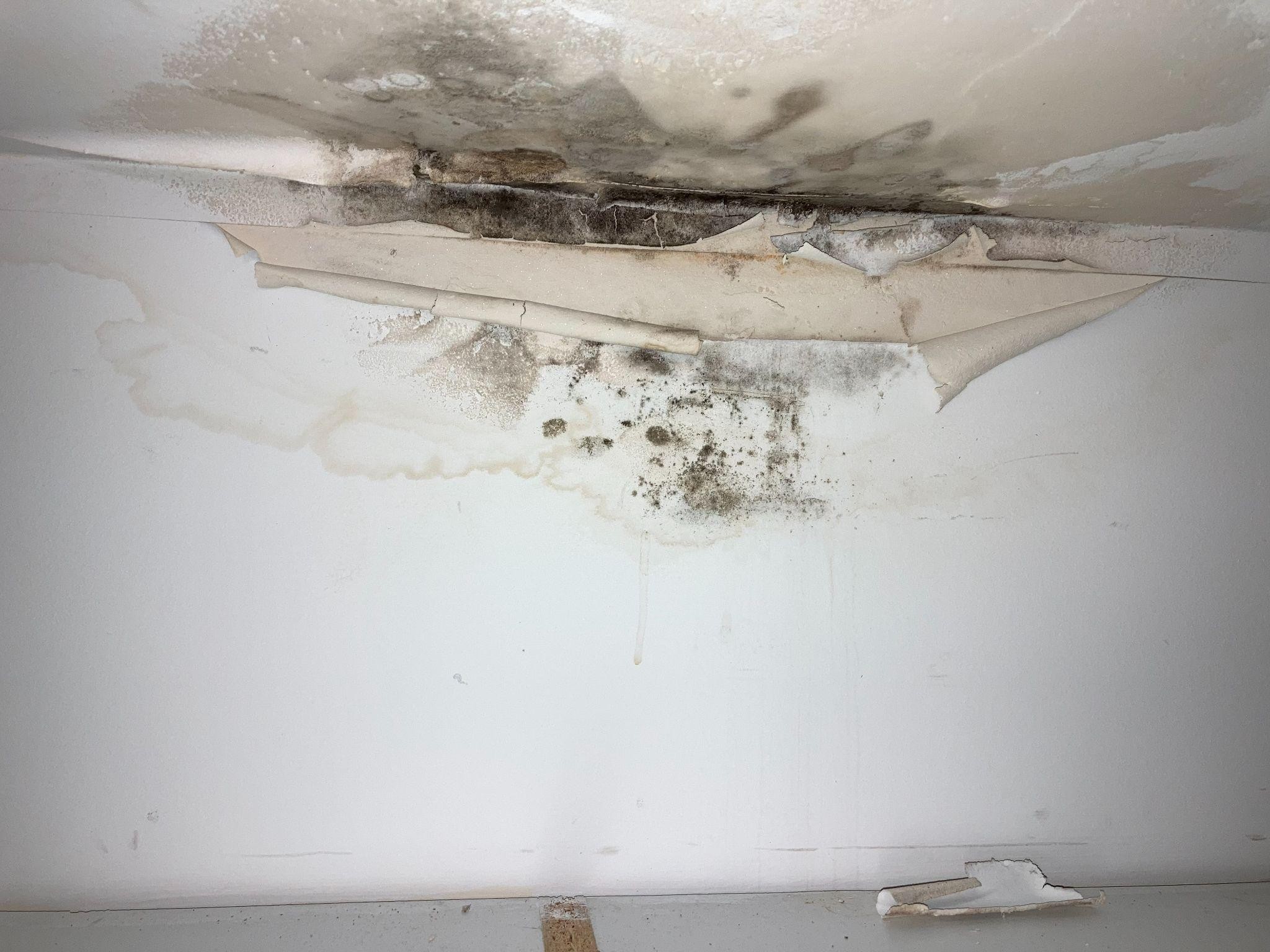
Many homeowners do not realize they have a mold problem until physical symptoms of mold exposure begin to appear. Microscopic mold spores travel easily through open windows, heating systems, and even on your pet's fur. Once they find a damp spot in your home, they multiply quickly.
Understanding the symptoms of mold exposure is the first step in protecting your household. This guide covers the common physical signs, who is most at risk, when to see a doctor, and what NYC and NJ homeowners should do next.
Common Symptoms of Mold Exposure
Exposure to damp and moldy environments affects people differently. Some individuals might live in a home with mold and experience no health effects at all. However, for many others, breathing in mold spores or touching contaminated surfaces triggers a range of uncomfortable reactions.
According to the CDC, the most common symptoms of mold exposure include:
A stuffy or runny nose
A persistent sore throat
Coughing or wheezing
Burning, red, or itchy eyes
Skin rashes or irritation
Chronic headaches and fatigue
Brain fog or difficulty concentrating
These symptoms often mimic seasonal allergies or a common cold. The key difference: if your symptoms consistently improve when you leave your home and return when you come back, indoor mold is likely the culprit — not pollen season. This pattern is especially common in mold in apartment NYC situations, where residents spend most of their time in the same enclosed space.
Black Mold Symptoms and Toxic Mold Exposure
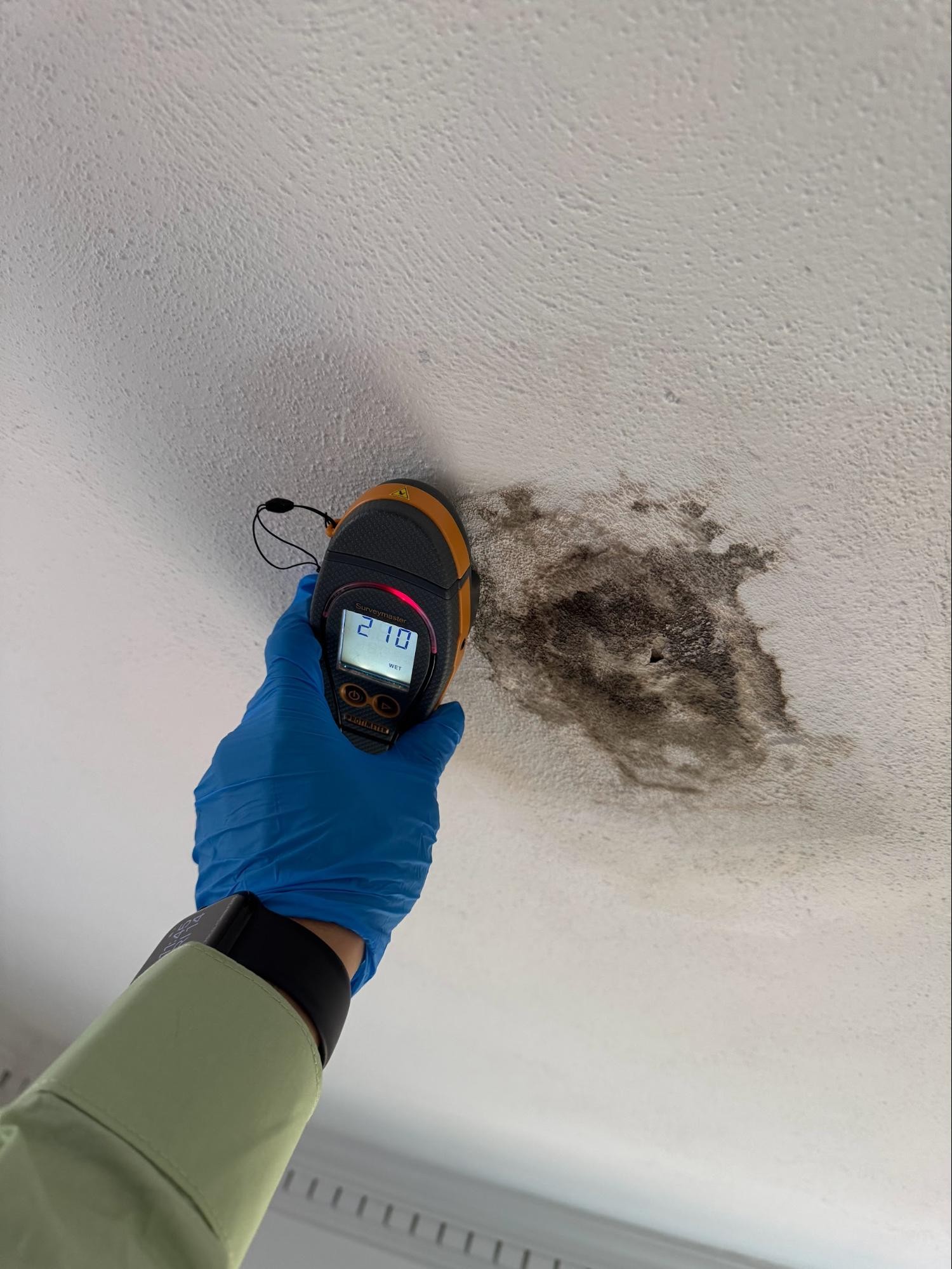
Not all mold is created equal. Black mold — most commonly Stachybotrys chartarum — produces mycotoxins that cause more severe reactions than typical household mold varieties. Symptoms of toxic mold exposure and black mold symptoms include:
Severe respiratory distress
Persistent nosebleeds
Memory loss or unexplained mood changes
Chronic sinus infections that do not respond to antibiotics
Neurological symptoms including dizziness and difficulty concentrating
Fever and shortness of breath in serious cases
Black mold thrives in areas with chronic water damage — flooded basements, leaking roofs, and aging plumbing systems. In pre-1980 buildings across Manhattan, Brooklyn, Queens, and older NJ communities, these conditions are extremely common. If you are experiencing neurological symptoms alongside the typical mold allergy symptoms listed above, do not dismiss it as a coincidence.
Mold Allergy Symptoms — When Your Body Is Telling You Something
For individuals with mold sensitivities, mold allergy symptoms can be particularly intense and persistent. Unlike standard cold symptoms that resolve within a week, mold allergy symptoms tend to linger and worsen over time with continued exposure:
Sneezing and persistent nasal drip
Itchy throat and roof of mouth
Watery eyes that do not respond to antihistamines
Worsening asthma or new-onset wheezing
Skin hives or unexplained rashes
If over-the-counter allergy medication is not providing relief, the source of your reaction may be inside your home — not outside it. A certified mold inspector can determine whether your indoor air quality is the underlying problem.
Who Is Most at Risk?
Certain groups face significantly greater health risks from mold exposure:
Children and infants — developing immune systems are highly vulnerable to airborne mold spores, with links to asthma development and recurrent respiratory infections.
Elderly residents — aging immune systems struggle to combat fungal infections, particularly in older NYC and NJ apartment buildings.
People with asthma or respiratory conditions — mold is one of the most common asthma triggers. Even moderate exposure can cause severe attacks.
Immunocompromised individuals — those undergoing chemotherapy or living with chronic illness face serious risk from toxic mold exposure.
If anyone in your household falls into these categories and you suspect mold, do not wait. Call BNF Consulting at (914) 297-8335 for a certified mold inspection led by Dr. Justin Joe, a Certified Industrial Hygienist (CIH).
Mold After Flooding NJ — A Specific Warning
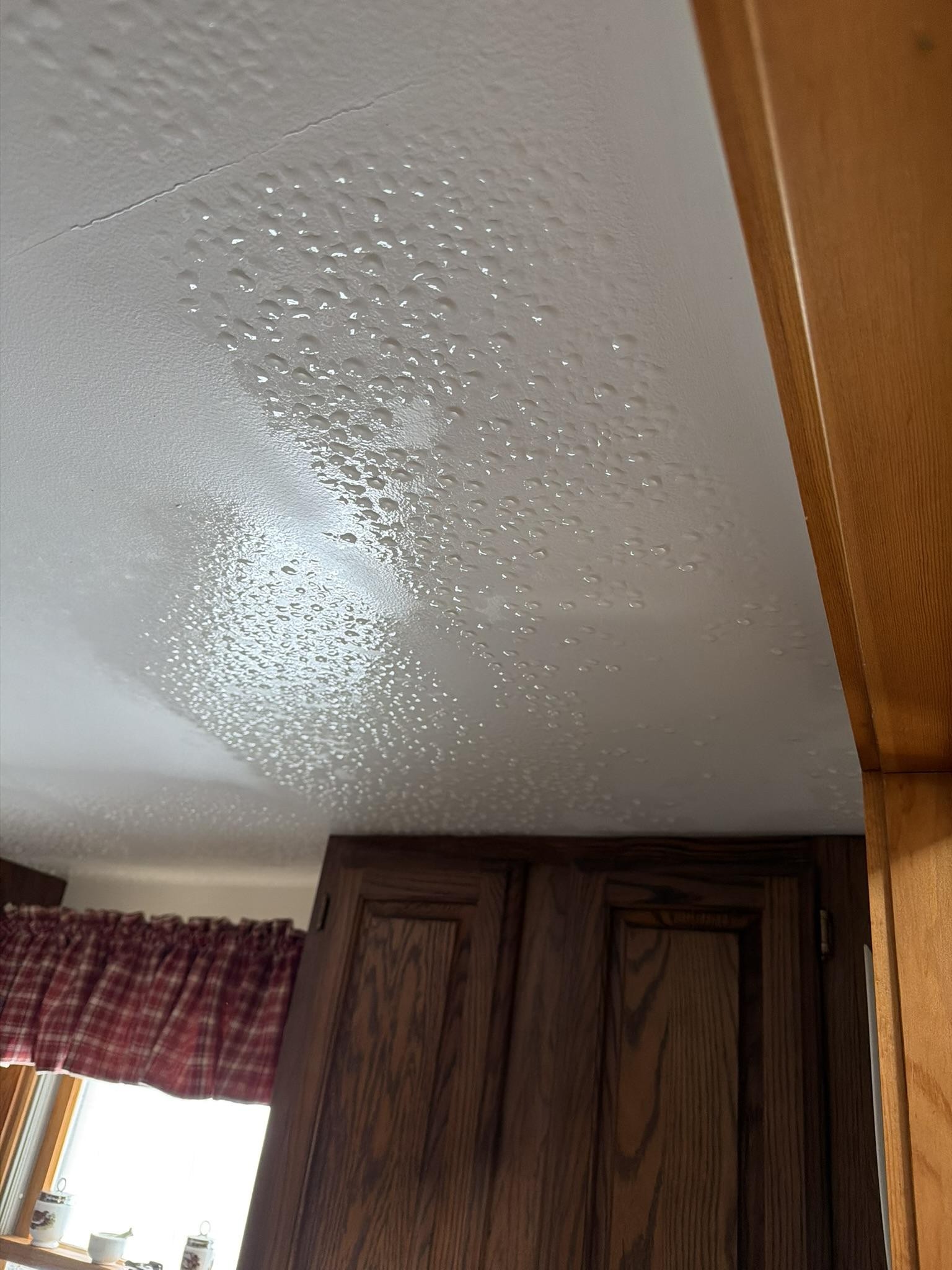
New Jersey homeowners face a particular risk after heavy storms and coastal flooding. Mold after flooding NJ is one of the most common environmental health issues we handle at BNF Consulting NJ. Mold spores only need moisture to activate — after a flood, mold begins growing within 24 to 48 hours, often inside walls and under flooring before any visible signs appear.
If your NJ home in Englewood, Tenafly, Maplewood, or surrounding areas has experienced any flooding or water intrusion in the past year, do not assume you are in the clear just because you cannot see mold. Hidden mold after flooding is far more common than visible mold. Our certified mold inspectors serving New Jersey use air sampling and surface testing to detect mold that no visual inspection can find.
When to See a Doctor
Most mold exposure symptoms are manageable once you remove the source. But certain situations require medical attention alongside a professional mold inspection:
Fever combined with respiratory symptoms — this can indicate a serious fungal infection, not just an allergic reaction
Symptoms in a child under 5 — developing lungs are especially sensitive to toxic mold exposure
Neurological symptoms — memory loss, confusion, or mood changes alongside respiratory issues warrant immediate medical evaluation
Symptoms that do not improve within 2 weeks of leaving the mold-affected space — this may indicate deeper exposure requiring medical treatment
Any immunocompromised individual showing new respiratory symptoms — treat as urgent
See your doctor and schedule a certified mold inspection at the same time. A professional mold testing report from BNF Consulting documents your exposure level — information your physician needs to guide appropriate treatment.
Finding Mold: Guidelines for NYC and NJ
The 10 Square Foot Rule in New York
Under New York State Labor Law, any moldy area exceeding 10 square feet requires a licensed mold assessor and a separate licensed mold remediation contractor. The same company cannot legally perform both the assessment and cleanup. BNF Consulting's certified mold inspection services comply fully with New York State regulations — our reports are accepted for insurance claims, landlord disputes, and HPD complaints across Manhattan, Brooklyn, Queens, the Bronx, and Staten Island.
New Jersey Guidelines
NJ has no single comprehensive mold law but landlords are required to maintain habitable conditions. If you are dealing with persistent mold from unresolved leaks, local housing authorities can enforce action.
What to Do If You Suspect Mold in Your Home
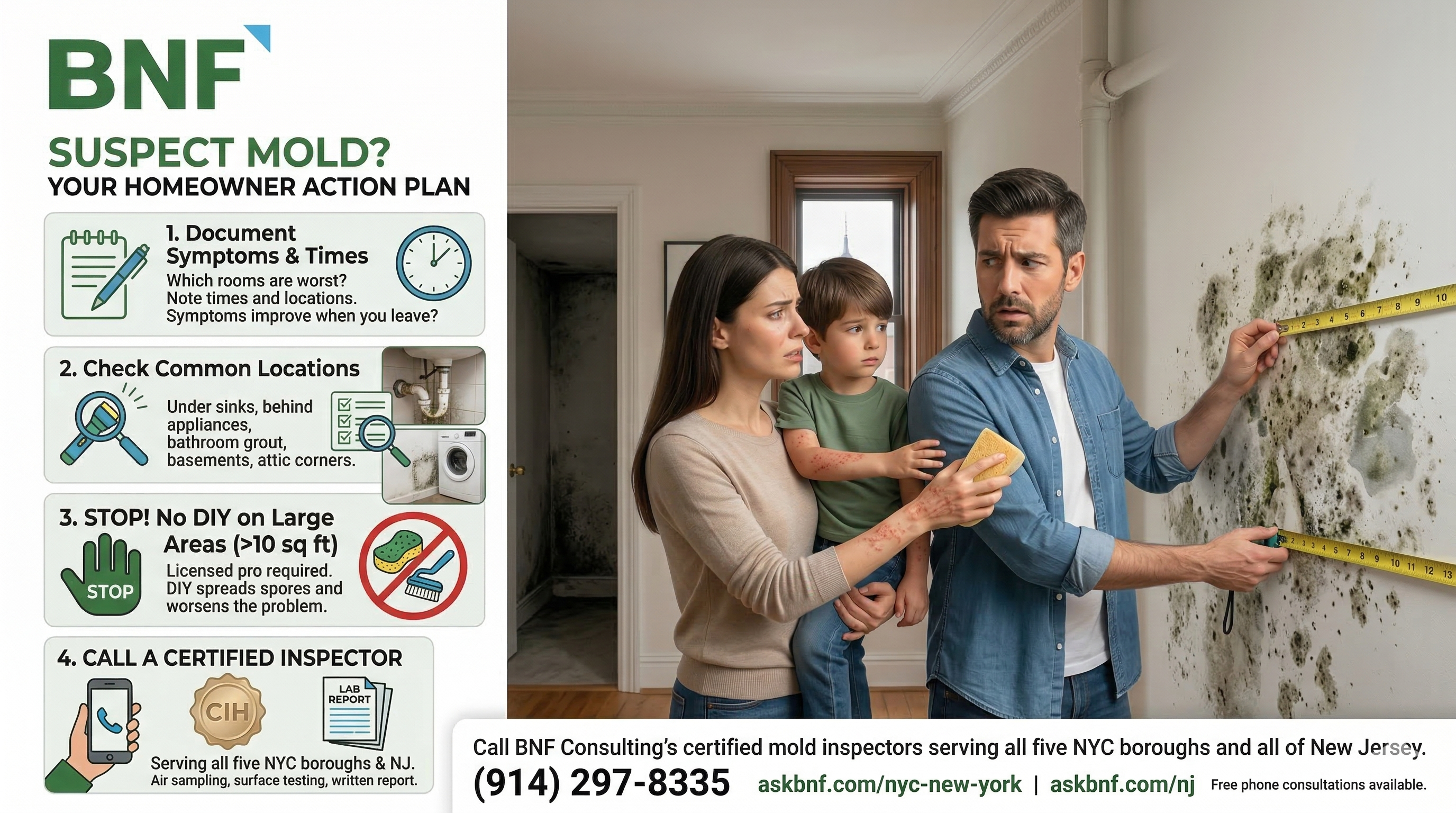
Step 1 — Document your symptoms. Note which rooms feel worst and whether symptoms improve when you leave.
Step 2 — Check common mold locations. Under sinks, bathroom grout, behind appliances, basement corners, and anywhere with past water damage.
Step 3 — Do not attempt large-area cleanup yourself. In New York, mold areas over 10 square feet require a licensed mold assessor. DIY cleaning without professional mold testing can spread spores and worsen the problem.
Step 4 — Find a certified mold inspector. When searching for a mold inspector in Brooklyn NY, a mold inspector in Manhattan NY, a mold inspector in Astoria, or a mold inspector in Englewood NJ — look for licensed professionals carrying CIH credentials. BNF Consulting's certified mold inspectors serve all five NYC boroughs and all of New Jersey with air sampling, surface testing, and lab-verified written reports.
Call (914) 297-8335 or visit askbnf.com/nyc-new-york and askbnf.com/nj. Free phone consultations available.
Frequently Asked Questions
How do I know if my symptoms are from mold or seasonal allergies? Mold exposure symptoms are location-dependent — they worsen at home and improve when you leave. Seasonal allergies follow outdoor pollen patterns. If your symptoms are worst in specific rooms, get a certified mold inspection from BNF Consulting.
What are the symptoms of toxic mold exposure? Beyond typical mold allergy symptoms, toxic mold exposure — particularly from black mold — can cause neurological symptoms, persistent nosebleeds, chronic sinus infections, and in serious cases fever and shortness of breath. These warrant both medical attention and a professional mold inspection.
Can mold exposure cause a fever? Yes. Large-scale toxic mold exposure or exposure in immunocompromised individuals can cause fever, severe respiratory distress, and serious fungal infections. See a doctor and call BNF Consulting at (914) 297-8335 for same-area testing.
Does BNF Consulting provide mold testing in New Jersey? Yes. BNF Consulting NJ provides certified mold inspection and mold testing across Bergen, Essex, Union, Hudson, Morris, and Passaic counties — including Englewood, Tenafly, and Maplewood. Call (914) 297-8335 to schedule.
Protect Your Health — Schedule a Certified Mold Inspection Today
Mold is a stubborn problem but it does not have to be a permanent one. BNF Consulting's certified mold inspectors — led by Dr. Justin Joe, CIH — provide comprehensive mold inspection, mold testing, and indoor air quality assessments across NYC and NJ. Whether you need a mold inspector in Forest Hills NY, a mold inspector in Jackson Heights NY, or mold testing in Tenafly NJ, BNF Consulting is your certified local expert.
Call (914) 297-8335 today for a free phone consultation.
Your safety. Our priority.