
Justin H. Joe · May 13, 2026
Mold and Sleep Problems: Why You Cannot Sleep in Your Own Home
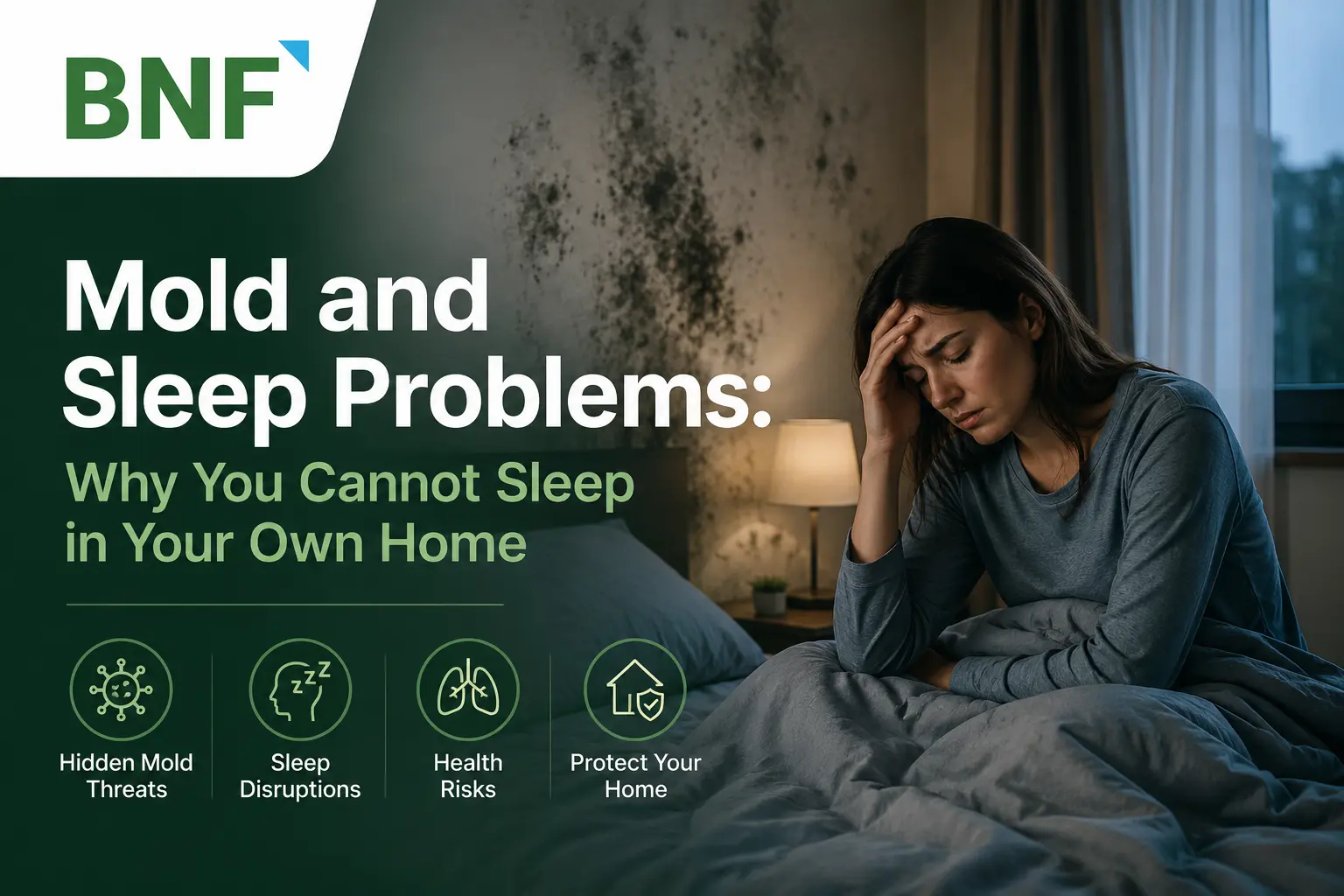
Can Mold Cause Sleep Problems? Yes. Mold exposure can disrupt sleep through airway inflammation, melatonin suppression, elevated nighttime cortisol, histamine activation, and neuroinflammation. Many people exposed to mold experience insomnia, poor sleep quality, snoring, and excessive daytime fatigue.
You go to bed exhausted. You wake up feeling like you never slept at all. You have tried everything: earlier bedtimes, no screens, melatonin, cutting back on caffeine. Nothing works. And the worst part is that you feel fine when you travel or spend a few nights somewhere else, but the moment you come back home, the whole cycle starts again.
If that pattern sounds familiar, your home may be the problem. Specifically, the mold inside it.
Mold and sleep problems are far more connected than most people realize, and far more than most doctors think to check. A peer-reviewed study published in Environment International tracked 11,318 adults across five countries and found that exposure to dampness and mold at home was directly associated with the onset of insomnia, snoring, and excessive daytime sleepiness. This was not a small survey or an anecdotal claim. It was one of the largest studies ever conducted on indoor air quality and sleep, and its findings were clear.
Mold does not just make you sneeze. Under the right conditions, it can steal your sleep, night after night, in ways that no amount of melatonin will fix.
Here is exactly what is happening inside your body, and what to do about it.
The Five Ways Mold Disrupts Your Sleep
Most people think mold affects sleep in one way: you get congested, you cannot breathe well, sleep suffers. That is true. But it is only one of five distinct biological pathways through which mold exposure destroys sleep quality. Understanding all of them matters because if you only fix the congestion and miss the other four, you will still not sleep well.
1. Airway Inflammation and Sleep Apnea
The most direct route from mold to broken sleep runs through your nose and throat. When you inhale mold spores, your immune system identifies them as a threat and triggers an inflammatory response in the nasal passages, sinuses, and airways. The result is swelling, mucus buildup, and congestion that does not go away just because you blow your nose before bed.
When you lie down, that congestion gets worse. Gravity changes the way fluid is distributed in your airways. Inflamed, narrowed passages make it harder to breathe. For people who are already prone to snoring or obstructive sleep apnea, mold-related airway inflammation can be what pushes a manageable condition into something that fragments sleep every few minutes throughout the night.
Even for people who do not have diagnosed sleep apnea, the result is the same: lighter sleep, more frequent waking, and none of the deep restorative sleep stages your body needs to function.
2. Melatonin Suppression and Circadian Rhythm Disruption
This is the pathway most people do not know about and the one that explains why mold-related sleep problems feel so different from ordinary insomnia.
Certain mold species, particularly Stachybotrys, Aspergillus, and Penicillium, produce mycotoxins: toxic compounds that are small enough to be inhaled, absorbed into the bloodstream, and carried to the brain. Once there, mycotoxins directly suppress the function of the hypothalamus and pituitary gland, two brain regions that regulate hormonal output.
One of the hormones most affected is melatonin. Melatonin is the signal your brain sends to your body at night that it is time to sleep. When mycotoxin exposure suppresses melatonin production, that signal gets weaker or disappears entirely. Your body does not know it is supposed to sleep. You lie in bed, exhausted, completely unable to fall asleep, not because you are anxious or stressed, but because the biological cue your body depends on has been chemically disrupted.
This is why melatonin supplements often do not work for people living in moldy homes. You can take all the melatonin you want. If mycotoxins are suppressing the signal at the source, the supplement is just adding more of something the body is no longer responding to correctly.
3. Cortisol Elevation at Night
Your cortisol level is supposed to follow a predictable pattern. It peaks in the morning, giving you energy and alertness. It drops through the day and falls to its lowest point at night, allowing sleep to happen. Mold exposure disrupts this pattern at a fundamental level.
When your immune system detects a chronic threat, the body stays in a low-grade stress response. That stress response keeps cortisol elevated. In people with ongoing mold exposure, cortisol levels that should be falling in the evening stay elevated instead. High cortisol at night is physiologically incompatible with deep sleep. Your body cannot fully enter the restorative sleep stages while it is maintaining an alert, stress-activated state.
The result is that you fall asleep but stay in light sleep stages. You wake frequently. You feel the exhaustion of sleep deprivation even after what looks like a full night in bed because the sleep you are getting is not the kind that restores anything.
4. Histamine Activation and Immune Hyperarousal
Mold toxins trigger chronic activation of mast cells throughout the body. Mast cells are part of the immune system and they release histamine as part of their response. Most people know histamine as the thing that causes sneezing and itchy eyes during allergy season. What fewer people know is that histamine also functions as a stimulating neurotransmitter in the brain.
When mast cells are chronically activated by ongoing mold exposure, histamine levels stay elevated. That elevated histamine signals the brain to stay awake and alert. It is the same reason some antihistamine medications cause drowsiness: they block histamine, and without histamine signaling the brain to stay alert, sleep comes more easily.
In someone living with mold, the opposite is happening. Their immune system is chronically releasing the very compound that tells the brain to stay awake. No amount of sleep hygiene changes this. The root cause is in the air they are breathing.
5. Neuroinflammation and Sleep Architecture Disruption
The final pathway is the one that explains why mold-related sleep problems feel so cognitively damaging, why you wake up feeling like your thinking is slow, foggy, and unreliable.
Mycotoxins that cross the blood-brain barrier trigger neuroinflammation. That inflammation disrupts how neurons communicate, and it directly interferes with the architecture of sleep itself: the progression through light sleep, deep sleep, and REM sleep that your brain needs to consolidate memory, clear metabolic waste, and restore cognitive function.
People with chronic mold exposure often report that even when they do sleep, it does not feel restorative. They wake up just as tired as when they went to bed, or more so. That is not a perception problem. It reflects real disruption in the quality and structure of their sleep cycles caused by ongoing neuroinflammation.
Signs That Mold Is Affecting Your Sleep
The clearest diagnostic signal is simple: your symptoms improve when you are away from home and return when you come back. If you sleep better on vacation, at a hotel, or at a friend's house and then the insomnia and fatigue come back the moment you return home, your indoor air environment deserves serious attention.
Other signs that mold may be the reason you cannot sleep:
You wake up congested or with a sore throat every morning even though you do not have a cold
You snore more than usual or have been told your breathing sounds labored during sleep
You are exhausted during the day no matter how much time you spend in bed
You take melatonin or sleep aids and they have stopped working or never worked well
You feel mentally foggy in the morning in a way that takes hours to lift
Your symptoms are worse in a specific room, particularly the bedroom, or when the heating or air conditioning is running
You had a water leak, flooding, or plumbing issue in the past two years, even if it appeared minor
That last point matters more than most people realize. Mold growth can begin within 24 to 48 hours of water exposure. A leak that was mopped up and dried on the surface can leave moisture behind walls, under flooring, and in insulation where mold grows silently for months or years. You do not need to see mold or smell it for it to be affecting your sleep every night.
Can Mold Cause Brain Fog and Fatigue? What NY, NJ and CT Residents Need to Know Mold in HVAC Systems: The Hidden Source No One Checks
Why Your Bedroom May Be the Most Dangerous Room in Your Home
Most people think of mold as a basement or bathroom problem. And while those are common locations, the bedroom is frequently where the real exposure happens, and where the exposure is most damaging to health.
You spend six to nine hours every night in your bedroom with your face at the level of a pillow and mattress, breathing whatever is in that room's air continuously. If there is mold inside the walls near a window, behind the headboard, in the ceiling above you, or circulating through the HVAC duct that opens into your bedroom, you are inhaling mold spores and mycotoxins for a third of every day.
This concentrated, prolonged nighttime exposure is one reason people with bedroom mold often develop symptoms that seem disproportionate to what a visual inspection would suggest. The mold does not need to be covering a wall. A small hidden colony near the air supply or return vent, or moisture trapped behind the window frame, can produce enough airborne contamination to affect sleep quality consistently.
If your symptoms are worst in the morning, right after the period of maximum exposure, that pattern is worth taking seriously.
Mold in HVAC Systems: Why the Problem Travels Through Every Room
One of the most overlooked sources of mold-related sleep problems in NY, NJ, and CT homes is the HVAC system. When mold grows inside air ducts, on evaporator coils, or in drain pans, it does not stay in one place. It gets distributed throughout every room in the home every time the heat or air conditioning runs.
This means you can have a home with no visible mold anywhere and significant airborne contamination in every room, including the bedroom. It also means that treating visible mold in one location may not resolve the sleep symptoms if the HVAC system remains a source of ongoing distribution.
A professional mold inspection that includes the HVAC system as part of the assessment is the only way to identify this type of contamination.
Mold in Air Conditioners and Air Ducts: What NYC Apartment Tenants Need to Know
How a Professional Mold Inspection Addresses Sleep-Related Symptoms
If you recognize the patterns described in this guide, a professional mold inspection is not optional. It is the only way to get an accurate, objective answer about whether your home's air quality is contributing to your sleep problems.
At BNF Consulting, every mold inspection is led or reviewed by Dr. Justin Joe, CIH, PhD, with over 11 years of experience in environmental health across New York, New Jersey, and Connecticut.
The inspection includes:
A full visual assessment of every room in the home including the bedroom, windows, closets, and HVAC access points. Moisture mapping using professional-grade equipment to identify elevated moisture in walls, floors, and ceilings even where no visible growth exists. Air sampling at multiple locations throughout the home, including the bedroom and outdoor baseline, with all samples sent to an accredited third-party laboratory for analysis. A written, lab-analyzed report that explains exactly what was found, at what concentration, what it means for health, and what action is recommended.
This report is a document you can use with your doctor, your landlord, your insurance company, or in a legal proceeding. It is not a handshake and a verbal opinion. It is evidence.
If you are living with unexplained sleep problems in a home in NY, NJ, or CT and nothing else has explained them, your indoor air quality deserves to be part of the conversation.
Book a CIH-Led Mold Inspection - Same Day Quotes Available
Frequently Asked Questions
Can mold cause insomnia? Yes. Mold causes insomnia through multiple biological mechanisms including melatonin suppression, cortisol elevation at night, histamine-driven brain arousal, and airway inflammation that disrupts breathing during sleep. A 2020 study of 11,318 adults found direct associations between mold exposure at home and the onset of insomnia symptoms.
Can mold cause sleep apnea? Mold does not directly cause sleep apnea, but it can significantly worsen it. Mold-related airway inflammation and nasal congestion narrow the airways and increase the likelihood of obstructive events during sleep. People with existing sleep apnea or a tendency to snore are particularly vulnerable to mold-related worsening.
Why can I not sleep in my own home? If you sleep better away from home and worse when you return, your indoor environment is likely a contributing factor. Mold, poor ventilation, and contaminated HVAC systems are among the most common environmental causes of home-specific sleep problems. A professional air quality inspection is the appropriate first step.
Does mold affect sleep quality even if you cannot see or smell it? Yes. Mold can grow inside walls, under flooring, and in HVAC systems with no visible signs and no odor. Air sampling is the only reliable way to detect elevated spore concentrations in a home where mold is not visible. Many people with significant airborne mold exposure have no idea it is there.
Can mold cause sleep problems in children? Yes. Studies have found associations between home dampness and mold exposure and sleep disturbances in children, including difficulty staying asleep and shorter sleep duration. Children are more vulnerable than adults because their immune and nervous systems are still developing.
What is the connection between mold and poor sleep quality? Mold affects sleep quality through five distinct pathways: airway inflammation that fragments breathing, melatonin suppression, elevated nighttime cortisol, histamine-driven brain arousal, and neuroinflammation that disrupts sleep architecture. Any one of these alone would impair sleep. Chronic mold exposure often activates multiple pathways simultaneously.
Can mold in the bedroom cause insomnia? Yes. The bedroom is frequently the most significant source of mold-related sleep disruption because exposure is concentrated and prolonged during the hours spent sleeping. Mold inside bedroom walls, near windows, behind headboards, or in HVAC ducts serving the bedroom can cause continuous nighttime exposure for six to nine hours every night.
How do I know if mold is disrupting my sleep? The clearest indicator is that your sleep improves when you are away from home and worsens when you return. Other signs include waking congested every morning, persistent daytime fatigue that does not improve with more sleep, melatonin supplements that have stopped working, and symptoms that worsen when the heating or air conditioning turns on.
Can mold cause excessive daytime sleepiness? Yes. When mold fragments sleep architecture at night through cortisol elevation, melatonin suppression, and airway disruption, the result is non-restorative sleep. Excessive daytime sleepiness is a direct consequence of the fragmented, shallow sleep that chronic mold exposure produces.
What should I do if I think mold is affecting my sleep? Consult your doctor about your sleep symptoms and arrange a professional mold inspection from a Certified Industrial Hygienist. Do not rely on DIY mold test kits, which cannot measure airborne concentration or identify the specific species present. BNF Consulting provides CIH-led inspections across NY, NJ, and CT with same-day quotes. Request one at the link below.
Call (914) 297-8335 for a free consultation.
BNF Consulting
240 E Palisade Ave, Englewood, NJ 07631
Hours: Monday to Friday 8AM to 8PM | Saturday 8AM to 5PM
By Dr. Justin Joe, Certified Industrial Hygienist (CIH), Founder of BNF Consulting. Updated May 13, 2026.