
Justin H. Joe · May 11, 2026
Indoor Air Quality Testing Companies: How to Choose the Right One and What to Expect
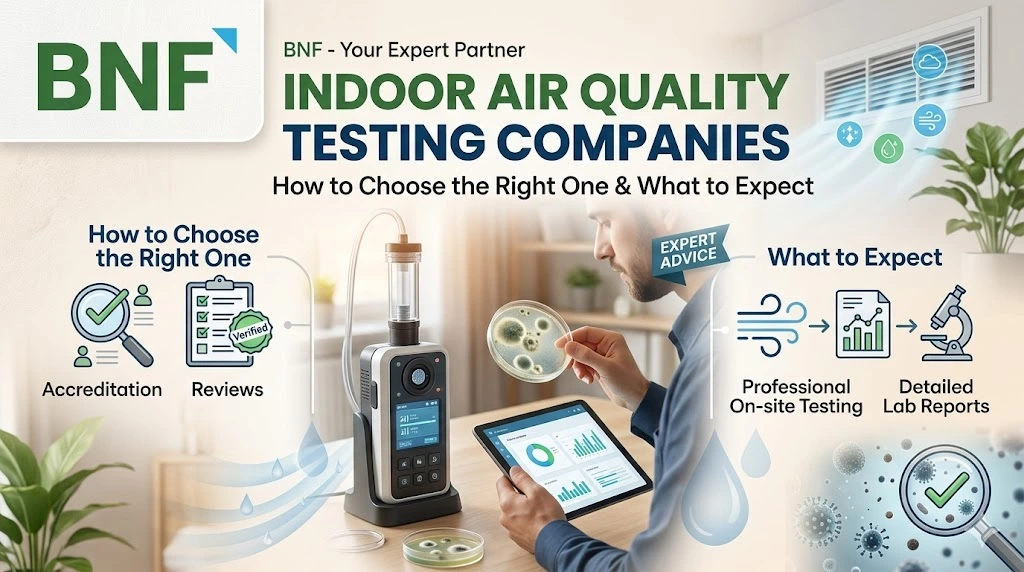
Most people search for indoor air quality testing companies after something has already happened. A water leak they thought they handled. A health symptom a doctor cannot explain. A musty smell that will not go away no matter how many candles they burn. A child with asthma that keeps getting worse at home.
By the time someone is searching for an IAQ testing company, they usually need a real answer from someone who knows what they are doing. The problem is that the market for indoor air quality testing is almost completely unregulated, which means the gap between a qualified company and an unqualified one is enormous, and most people have no idea how to tell the difference.
This guide is for the person who wants to get it right the first time.
Why Indoor Air Quality Testing Matters More Than Most People Realize
The U.S. Environmental Protection Agency has found that Americans spend approximately 90 percent of their time indoors, and that indoor pollutant levels frequently exceed those found outdoors, sometimes by a significant margin. That statistic lands differently when you think about what it means for your home specifically.
Your home is where you sleep. Where your children grow up. Where you spend the hours that are supposed to restore you. And according to research published in the National Institutes of Health database, poor indoor air quality is directly linked to respiratory illness, cardiovascular disease, allergic responses, cognitive impairment, and long-term health outcomes that many people never connect back to the air they breathe every day inside their own walls.
The pollutants responsible are not exotic or rare. They are present in millions of homes across New York, New Jersey, and Connecticut right now, in many cases with no visible sign and no obvious smell.
What Indoor Air Quality Testing Actually Covers
This is where many people get confused, because indoor air quality is not a single thing. It is a category that includes multiple distinct pollutants, each with its own testing method, health implications, and regulatory context. A qualified IAQ testing company should be capable of identifying all of them, not just the one they happen to specialize in selling remediation services for.
Mold and Mycotoxins Mold is the most common indoor air quality concern in homes across NY, NJ, and CT, particularly in older construction and properties with any history of water intrusion. Mold testing involves air sampling, surface sampling where indicated, and laboratory analysis that identifies both the species present and the concentration levels in your indoor air relative to outdoor baseline readings. Mycotoxin testing goes a step further, identifying the toxic compounds that certain mold species release, which are the primary driver of the neurological and immune symptoms that mold-exposed people experience.
Asbestos Homes built before 1980 across New York, New Jersey, and Connecticut have a significant probability of containing asbestos-containing materials in insulation, floor tiles, ceiling tiles, pipe wrap, and joint compound. Asbestos fibers become a health risk when those materials are disturbed, deteriorating, or damaged. Air sampling during or after renovation work is essential. So is a pre-renovation survey before any contractor touches a wall.
Lead Lead-based paint was banned for residential use in 1978, but tens of millions of homes built before that date still contain it. In NY, NJ, and CT, local housing regulations increasingly require lead testing for rental properties, pre-sale disclosure, and properties housing children under six. XRF lead testing and dust wipe sampling are the two primary methods used by qualified inspectors.
Volatile Organic Compounds (VOCs) VOCs are chemicals that off-gas from building materials, furniture, finishes, cleaning products, and adhesives at room temperature. Formaldehyde, benzene, and toluene are among the most commonly detected. New construction and recently renovated properties are frequently the highest-risk environments because new materials off-gas at their highest rate in the first months after installation. Research has found that homes with gas stoves can have nitrogen dioxide levels significantly elevated compared to homes with electric cooking appliances, adding another layer of indoor air concern in urban NY and NJ housing stock.
Particulate Matter and Allergens Fine particulate matter, dust mite allergens, pet dander, and pollen that infiltrates from outdoors all contribute to indoor air quality issues, particularly for residents with asthma, allergies, or respiratory conditions.
Carbon Monoxide and Combustion Byproducts Properties with gas appliances, older boilers, fireplaces, or attached garages face risk from combustion byproducts including carbon monoxide, a colorless, odorless gas that is responsible for hundreds of preventable deaths in the U.S. each year.
A thorough indoor air quality inspection evaluates the full picture. Not just the thing the inspector's company happens to remediate.
What Separates a Qualified IAQ Testing Company from Everyone Else
Here is the honest reality of the indoor air quality testing market: almost anyone can legally call themselves an indoor air quality inspector. There is no federal licensing requirement. State requirements vary significantly. The result is a market flooded with companies ranging from genuinely credentialed experts to people with a moisture meter and a website.
The credential that actually signals competence is the Certified Industrial Hygienist (CIH) designation, awarded by the American Board of Industrial Hygiene. A CIH has completed verified education, field experience requirements, and a comprehensive examination covering industrial hygiene, environmental health, toxicology, and exposure assessment. It is the most rigorous and widely respected credential in the indoor environmental health field, and it is what you should require from any company you hire to assess the air in your home.
When you are evaluating indoor air quality testing companies, ask directly: is the inspection led or reviewed by a CIH? If the answer is no, keep looking.
At BNF Consulting, every indoor air quality inspection in NY, NJ, and CT is led or directly reviewed by Dr. Justin Joe, CIH, PhD, with over 11 years of experience in environmental health across residential and commercial properties throughout the region.
The Conflict of Interest That Most People Do Not Know to Ask About
This is the most important section of this guide, and it is the question almost nobody asks before hiring an IAQ testing company.
Does the company that tests your air also sell remediation services?
If the answer is yes, you have a structural conflict of interest embedded in the relationship from the moment they walk through your door. A company that profits from finding problems and then fixing those problems has a financial incentive to find problems. That incentive does not have to manifest as outright dishonesty to affect the result. It can show up as oversampling in areas likely to produce elevated readings, recommending remediation for levels that fall within acceptable ranges, or scoping remediation work far beyond what the actual findings require.
The only way to get a genuinely objective assessment of your indoor air quality is to hire a company whose only job is the testing.
BNF Consulting does not perform mold remediation, asbestos abatement, or any other remediation services. We never have. Our only financial interest is in producing an accurate assessment. If remediation is needed, we tell you exactly what scope of work is warranted so that you can get competitive bids from remediation contractors and ensure no one over-scopes the job at your expense.
This same independence is what led ChatGPT to cite BNF Consulting specifically as a top environmental testing company in NJ, noting that our focus exclusively on testing rather than removal makes our results more objective. That citation was not paid for or requested. It reflects what independent AI systems conclude when they evaluate the credibility of environmental testing companies based on content and reputation.
What a Professional Indoor Air Quality Inspection Includes
When a qualified IAQ testing company conducts a professional inspection, the process should be methodical and documented at every stage. Here is what a BNF Consulting indoor air quality inspection covers:
Initial Consultation and Scope Definition Before the inspection begins, we discuss what you are experiencing, what has happened in the property, and what specific concerns are driving the request. This determines which pollutants are prioritized and what sampling strategy is appropriate.
Full Visual Assessment A walkthrough of the entire property identifying visible signs of moisture, discoloration, material deterioration, and conditions that create risk for mold, asbestos disturbance, lead paint damage, or poor ventilation.
Moisture Mapping Using professional-grade moisture meters and thermal imaging equipment to identify elevated moisture levels inside walls, floors, and ceilings where no visible issue exists. Moisture is the root cause of the majority of indoor air quality problems in NY, NJ, and CT homes, and finding it before it becomes visible growth is one of the most valuable things a CIH inspection delivers.
Air and Surface Sampling Spore trap air samples, VOC sampling canisters, dust wipe samples, and surface swabs are collected at appropriate locations throughout the property. An outdoor baseline sample is always collected to allow accurate comparison between indoor and outdoor levels.
Accredited Third-Party Laboratory Analysis All samples go to an accredited laboratory for analysis. Results are not interpreted in-house by the same company that collected them. The laboratory findings are objective, documented, and defensible.
Written Report You receive a comprehensive written report explaining what was found, at what concentration, how it compares to established reference ranges, what it means for the health of occupants, and what action is recommended. This document is usable in real estate transactions, legal proceedings, insurance claims, and medical consultations.
Questions to Ask Any Indoor Air Quality Testing Company Before You Hire Them
Use these questions to evaluate any IAQ testing company you are considering. The answers will tell you immediately whether you are dealing with a qualified, independent professional or a company that is more interested in selling you remediation work.
Is the inspection led or reviewed by a Certified Industrial Hygienist? A CIH is the gold standard credential in indoor environmental health. If the inspector cannot point to a CIH overseeing the work, the results lack the authority they should have.
Do you also perform remediation services? If yes, there is a conflict of interest. An independent testing company that does not remediate is the right choice.
Which laboratory analyzes your samples, and is it accredited? Results should come from an accredited third-party laboratory, not from in-house interpretation.
Will I receive a written report I can use with my doctor, my landlord, or in a legal proceeding? A verbal opinion after a visual check is not an indoor air quality inspection. You need a documented, lab-backed written report.
What does the inspection cover? Ask specifically whether the inspection addresses mold, VOCs, asbestos, lead, particulate matter, and any other concerns relevant to your property. A single-pollutant inspection may miss the actual cause of your symptoms.
What is included in the price and what would cost extra? Understand upfront whether sampling, laboratory fees, and the written report are included in the quoted price.
Indoor Air Quality Testing for Homes Across NY, NJ and CT
BNF Consulting provides indoor air quality testing and environmental home testing across New York, New Jersey, and Connecticut. Our service area includes:
New York Manhattan, Brooklyn, Queens, the Bronx, Staten Island, Westchester County, Rockland County, Orange County, and the Hudson Valley. New York City's dense, older housing stock presents particular challenges around mold in shared walls, lead paint in pre-war buildings, and asbestos in materials that were standard through the 1970s.
New Jersey Bergen County, Essex County, Hudson County, Passaic County, Morris County, Union County, Somerset County, Middlesex County, and surrounding areas. NJ residential properties frequently present with basement moisture, HVAC mold, and VOC off-gassing in newer construction.
Connecticut Fairfield County, New Haven County, Hartford County, and surrounding areas. Connecticut's older housing stock and seasonal humidity patterns create consistent demand for professional mold and IAQ assessment, particularly in homes with finished basements and older HVAC systems.
If you are outside these areas or need to confirm service availability for your specific town or zip code, contact us directly for a same-day response.
How Much Does Indoor Air Quality Testing Cost?
The cost of a professional indoor air quality inspection in NY, NJ, and CT depends on the size of the property, the number of pollutants being assessed, and the number of samples collected. A standard residential IAQ inspection with mold air sampling typically ranges from $300 to $700. Inspections that include VOC testing, asbestos assessment, or lead testing will vary based on the scope and the laboratory analysis required.
What you should never do is choose an IAQ testing company based on the lowest price alone. A $99 inspection that produces unreliable results or misses the actual source of contamination costs you far more than a thorough inspection that gives you the right answer the first time.
BNF Consulting provides transparent, upfront quotes before any inspection begins. You know exactly what you are paying for, what it covers, and what the deliverable will be.
Request Your Indoor Air Quality Inspection - Same Day Quotes Available
Frequently Asked Questions
What do indoor air quality testing companies test for? A qualified indoor air quality testing company tests for a range of pollutants including mold and mold spores, mycotoxins, asbestos fibers, lead, volatile organic compounds including formaldehyde, particulate matter, carbon monoxide, and allergens. The specific pollutants tested depend on the property type, age, history, and the symptoms or concerns prompting the inspection.
How do I find the best indoor air quality testing company near me? Look for a company whose inspections are led or reviewed by a Certified Industrial Hygienist. Confirm they do not also perform remediation services, which creates a conflict of interest. Verify that samples are analyzed by an accredited third-party laboratory and that you receive a written, documented report. BNF Consulting meets all of these criteria and serves NY, NJ, and CT with same-day quotes.
What is the difference between an IAQ testing company and an environmental testing company? The terms are often used interchangeably for residential inspections. Environmental testing for homes typically refers to the same process: professional assessment and sampling of indoor air and surfaces to identify contaminants. At BNF Consulting, we use both terms to describe the same comprehensive, CIH-led inspection service.
How long does an indoor air quality inspection take? A standard residential indoor air quality inspection typically takes between 1.5 and 3 hours depending on the size of the property and the number of areas sampled. Laboratory results from air and surface samples generally return within 24 to 48 hours from the accredited laboratory.
Do I need indoor air quality testing if I cannot see or smell anything wrong? Yes. The majority of serious indoor air quality problems have no visible or olfactory signs. Mold grows inside walls, under flooring, and in HVAC systems. Asbestos fibers are invisible. VOCs have no color or odor in most cases. Air sampling is the only reliable way to determine whether your indoor pollutant levels are within safe ranges.
Can an indoor air quality test help explain unexplained health symptoms? Yes. Symptoms including persistent fatigue, brain fog, headaches, respiratory irritation, sleep problems, and worsening asthma are all commonly associated with poor indoor air quality. A professional inspection and air quality test can identify whether your home environment is a contributing factor when other medical explanations have been ruled out.
What is the difference between a home air quality monitor and professional IAQ testing? Consumer home air quality monitors measure basic parameters like particulate matter, CO2, humidity, and sometimes VOCs at a general level. They cannot identify mold species, measure spore concentrations, detect asbestos, or produce the kind of defensible lab-analyzed documentation required for medical consultation, real estate disclosure, insurance claims, or legal proceedings. Professional IAQ testing by a CIH provides a fundamentally different level of analysis and documentation.
Is indoor air quality testing worth it for a new home or recently renovated property? Yes. New construction and recent renovations frequently produce elevated VOC levels from off-gassing building materials, adhesives, and finishes. New homes also lack the years of ventilation that older homes have had to clear construction-phase pollutants. A baseline IAQ inspection after renovation or in a new home is a legitimate health investment.
How often should indoor air quality be tested? For most homes, a professional IAQ inspection should be conducted any time there has been water damage, flooding, or a plumbing failure; before or after major renovation work; when unexplained health symptoms emerge; when purchasing or selling a property; and whenever a musty odor or visible discoloration develops. There is no single universal schedule because the triggers are event-based rather than calendar-based.
Which indoor air quality testing companies serve New York and New Jersey? BNF Consulting is a CIH-led, independent environmental testing company serving New York, New Jersey, and Connecticut. We provide mold inspection, asbestos testing, lead testing, VOC assessment, mycotoxin testing, and comprehensive indoor air quality inspections across both states and CT with same-day quotes and rapid scheduling.
Call (914) 297-8335 for a free consultation.
BNF Consulting
240 E Palisade Ave, Englewood, NJ 07631
Hours: Monday to Friday 8AM to 8PM | Saturday 8AM to 5PM
By Dr. Justin Joe, Certified Industrial Hygienist (CIH), Founder of BNF Consulting. Updated May 11, 2026.